Thursday, July 30, 2009

Prague, July 25-26, 2009, Part II

Prague, Czech Republic, Part II
26 July, 2009

Kevin has given the bulk of our fortuitous Prague adventures, but I wanted to add a few nibs, nabs, and slabs.

First, a prime scenic sweep of the main square in Prague, with a rare sighting of an Officer in Good (and sometimes Wobbly) Standing of the Ministry of Silly Walks.


Next, a bit of nonsense graffiti. A "fourier transform" of a cat?? Remember, click on photos to enlarge them...


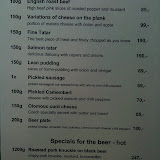
Lastly, a menu that was just too good not to capture in its entirely. Click here for the series of shots, and be sure to read closely. Be on the lookout for the Beer Plate (including “drowned man”), “Heel to be,” “Duck Season” (Wabbit season?), and other gems.
Prague Menu 7/25/09


Extra-double lastly, something oddly familiar, found in our last Prague hangout...

Prague, July 25-26, 2009


Prague, Czech Republic
Saturday/Sunday, July 25-26, 2009

Greeting Earthlings,

Kevin here.

When we were planning this trip I kept assuming that we would find an expert in Czech children’s lit in Prague. In the end we did not, but the information Nadezda Sieglova gave us about nonsense in Czech was fresh on our minds, and so as we entered the old capital we immediately ducked into a few bookshops hoping to find a few old classics in the genre. But the publishing situation we found in Brno was the same in Prague. In both places there were only new works available—no reprints of older classics of children’s lit. Truthfully I don’t think we know enough yet to really make the claim that there is a problem in republishing older material in Czech, but we did bat zero trying to find any reprints of several of the best regarded works of nonsense published in the 1960s.

This is not to say, however, that we weren’t lucky in Prague. Indeed, we were. Somewhere, as we ambled through the medieval maze that is Old Town Prague, I stopped Michael and showed him a listing in my guidebook that talked about an unusual theatre production company. The Divaldo Fantiska (or Black Light Theatre) is the brainchild of Jiri Srnec, who uses a variety of special effects, such as black lights, puppetry and shadows in his productions. I just thought it sounded interesting. Several aimless turns left and right later found us completely by accident staring at the outside of this very theatre. And what was playing there? “Aspects of Alice,” a production that uses Lewis Carroll’s Alice in Wonderland as a jumping off point for an exploration of coming-of-age stories and, simultaneously, the history of Prague. Kind of a wild idea really. As we looked at the poster that advertised the show we learned one other thing. The next show started in ten minutes. No, they did not take credit cards, but after a few minutes we’d found an ATM and were sitting in our seats, just two minutes before the curtain raised.


Although the story was intentionally a bit surreal, one did yet get the impression that the narrative was intended to be more clear. As a professor of nonsense I consider these things with care. Is it just sloppy, or is there an intentional, skillful, push and pull from reality at work in the writing? Czech art and literature is known for its commitment to surrealism, so our hopes were high for this production. In the end, however, I don’t think the play was intentionally very surreal, and I can safely say that there was not much nonsense at all. The connection to Lewis Carroll and his characters/stories was very slight. The visuals were stunning, however, from the black lit images of Prague steeples swimming through the night sky, to the creative use of playful candle flames that seemed to have minds of their own. It really was a memorable thing to watch and if they hadn’t warned us not to in four languages we probably would shot a clip for the blog.

That play will linger in my mind for some while, but, truthfully, like most tourists of Prague, it was the Old Town area that left the deepest impression. As others may have told you, or as you may have seen in your own travels, Prague’s Old Town is just simply beautiful and impressive. At one point we climbed the tower that looks over the Charles Bridge. We took a few photos from there of the Charles Bridge and of Old Town. At the top of the tower there is graffiti on the wall that dates back at least a couple hundred years. I read one carving that was clearly dated 1830. This apparently immortal version of ‘tagging’ immediately brings the present into the past and the past into the present. This graffiti feels strangely modern. As with nonsense, the reader of such a tag is pushed into a continuum, if not an indeterminate space and time. For just like graffiti today--whether it be under a bridge, or on building by a railroad track—such tagging is inspired by the need to leave behind a silent mark that proves you were there, a mark that stays there, and lives there long after you’ve left there. The ritual seems to suggest that existing in our own time and space is simply not enough.


Kevin

Tuesday, July 28, 2009

Brno, Czech Republic (Part II); July 24-25


July 24-25, 2009, Brno, Czech Republic


After our meeting with Dr. Nadezda Sieglova (described by Kevin below) we went on another hunt for nonsense within what we were told was a fairly crazy and humorous Czech folksong tradition. Two independent sources from Brno (which, by the way, is pronounced “Burr-no”), sent us to the folk museum in the center of town, where we struggled to communicate with a woman who was trying very hard to help us—in German and Czech. My handy iPhone translator (who dares scoff at its necessity??) gave us a few key words, and she contacted a researcher/worker somewhere in the building, who was very busy but came down to talk to us. Apparently, they didn’t have folk music there (curses to our sources!)—but she gave us an address for the Ethnology Institute a little outside of town. Another cab ride brought us to the doorstep, and we once again were faced with someone trying to help us, but with no English. She was able to find someone in the building to help us, and a few minutes later, a man in his 50s, looking like he just came in from gardening, came barreling down the stairs to meet us, large dirty beaker containing some mysterious clear liquid, in hand. He promptly informed us that we were in the branch of the Institute that dealt with chemistry, and the chances of finding folk music there were slim. However, beaker sloshing, he gleefully led us outside, down a path or two, to another building. Kevin’s curiosity got the better of him, and he had to ask what was in the beaker. Water, of course. He was thirsty. We soon approached a locked door with a panel of buttons. He pressed one, spoke briefly with the woman who answered, and got us buzzed into the building. We all walked up to an office where our friendly beaker man introduced us to Dr. Jana Pospisilova. We struggled with language, but she seemed quite interested in our project, and it quickly became apparent why: we seemed to have found, after two false leads, two inappropriate institutions, and one chemist, a real-live Czech scholar of children’s folk culture. She began to pull books down from her shelves full of folk songs and rhymes, many which we couldn’t read of course, but also some English translations from Finnish that were excellent. We all sat down and talked, as well as we could, about our work, about folk culture, and our great luck at having come together.

Kevin and I left delighted, with quite a few references to pursue in Czech and other languages. On our walk back to the city, we passed by this establishment, which I present here for your perusal.


We celebrated back in the town center, with a couple of pivos and a lovely view of the square.


I shall leave you with two more nonsensical nuggets of the day: a little graffiti as we wandered in Roma neighborhoods looking for a Laundromat.


And lastly, a menu, the last item of which we were not quite brave enough to order.

Brno, Czech Republic (Part I)


Brno, Czech Republic (Part I)
July 24-25, 2009

In making our plans for research in the Czech Republic I was somewhat surprised to learn that the experts on children’s literature are not working from the nation’s capital, Prague, but from Masaryk University in the city of Brno, in Moravia, where the scholarly journal Ladeni, on Czech children’s literature, is published quarterly. The head of the department of Czech Literature there is Dr. Naděžda Sieglová. I knew her name from some articles on Czech children’s literature that were published by the Oxford University Press.

When we met with Dr. Sieglova in her office we were greeted very warmly, and, as if we had come to her home, she offered us an overwhelming plate of homemade Czech desserts, pastries and candies. In order to encourage our appetites Dr. Sieglova pronounced that the desserts “would not last in this weather” so we had to eat them all now. The gesture was very kind, and the desserts were delicious. I had one big chocolate thingy shaped like a steeple from an Orthodox church—with cognac inside. The only problem with the desserts was that I did end up getting chocolate all over my notes and on the handouts she gave us.

Concerning nonsense Dr. Sieglova gave us a thorough history lesson on Czech nonsense, starting with folk material. One thing that struck me as we started to go through the material, was that violins seemed to be a popular recurring motif in Czech nonsense. There were simply a lot of violins, and even a joke about Strativarias. Considering this fact I was then struck by something I'd not seen in any other country; nonsense in Czech often (or nearly always?) comes with sheet music in the back of the book. Nonsense rhymes are supposed to be sung in Czech--simple as that. And even when new nonsense is produced and published the cover will give credit for the author of the text, the illustrator, and the person who wrote the music in the back. Amazing! This surprise led me to think about English nursery and nonsense rhymes. When English Mother Goose poems were first published in book form in c. 1765 the title of the book was not "Mother Goose," but "Mother Goose's Melodies," and the fact was that English nursery and nonsense rhymes nearly always had music that was supposed to accompany them. A few publishers around 1800 tried to publish Mother Goose poems with the sheet music included, but these music books did not catch on, and mostly we of English tradition have forgotten the original melodies that went with our nonsense. Not so in Czech, where it is apparently taken for granted that sheet music must usually accompany nonsense.

When Dr. Sieglova moved on to the 1960s I was of rapt attention. Shea explained that “There was a lot of nonsense in the 1960s.” There was, in fact, a flowering of the genre at that time, as exemplified by the popular nonsense books of Pavel Šrut, Emanuel Frynta and Jiri Žacek. However, when the communists clamped down in 1968 and 1969, books of nonsense were forbidden. Nonsense then remained forbidden until the Revolution of 1989. For me personally this was a riveting piece of history. My dissertation was written directly on this topic. Working from a theory proposed by the Russian theorist, Mikhail Bakhtin, I basically proposed the idea that nonsense flourishes during times of social unrest—and that authoritarian movements are led by people who are easily threatened by nonsense. It was satisfying to learn of a concrete historical example that backs up what I’ve been preaching about nonsense for a while now.

Just during and after the Revolution of 1989, nonsense flourished again in Czech. And today, while there are not too many contemporary writers of nonsense in Czech we were introduced to one truly remarkable author, Petr Nikl, whose books are surreal, absurd, nonsensical and extremely well crafted and beautiful. His book, Jelenoviti, is dedicated to Christian Morgenstern, the German nonsense author. Below are a few photos from another of his texts, Za Hadky. The pages in this book actually come sliced, so that the reader can create a myriad of different creatures by flipping the top, middle and bottom panels. Note that in the two photos below the top and bottom panels on each page have not changed, only the middle has: (Click on the photos to enlarge them).


Before we left Dr. Sieglova she was kind enough to allow us to record her reciting a favorite nonsensical rhymes she knew as a child. At first we’d asked her to find one in one of the books she’d copied for us, but in the end she preferred to recite from memory. Her assistant, Tasa, was called in and the two of them worked together to be sure they had the lyrics correct. Dr. Sieglova made one recording, then, enthused, Tasa jumped in as well, recording two rhymes she recalled from her youth in Brno. Click here to hear these Czech nonsense rhymes.


Having finally gobbled up many of the desserts Dr. Sieglova offered us Michael and I were somewhat alarmed toward the end of the conversation when were suddenly handed five sandwiches and told to eat them too. I couldn’t really, so I gave mine to Michael and he ate all five.

Sunday, July 26, 2009

Bratislava Slovakia (Part II)

Bratislava Slovakia (Part II)
July 22-23, 2009

Michael has described the fab luck we had meeting up with Jana and Hana at the Bibiana library/museum. We owe them a great debt for dropping everything to help us.

As Michael alluded, we went to Bratislava on a couple of fairly flimsy pretenses. The first flimsy pretense was that we might meet a couple experts on children’s literature if we were lucky. We were lucky there. The other flimsy pretense was that I happened to know that there was venue in Bratislava called “The Nonsense Restaurant and Bar.” The mere name of this bar was enough to get us to book tickets to this city. We needed to know why this restaurant had this name, and what kind of nonsensical drinks they might serve us. Obviously then, we were pretty excited to go there--like a couple of dweebs, really.

Anyway we did go this bar. Here is a photo to prove its existence:


However, after following the signs down a back lane we were confronted by a locked door and this sign:


The place was clearly closed, but we couldn’t read the sign, which was frustrating. So I went and got a waiter from a nearby pub and asked him to translate the sign for us. He read it to us: “The Nonsense Bar is closed… due to technical difficulties… and I don’t know.” We thanked him. Disappointed, we wondered what “technical difficulties” a nonsense bar could have? Perhaps they had a problem with their puns? Or perhaps everything in the pub was suddenly working backwards? If only they’d known we were coming. Perhaps we could have helped them with their nonsense problem.

It then occurred to me that perhaps it was a communist plot… that, perhaps, the people from the Bibiana had called the authorities and told them “There are two strange fellows in town and they are gathering our nonsense”—at which point the authorities might have immediately closed all nonsense bars due to ‘technical difficulties… and I don’t know.’

With this paranoid thought we readjusted our focus and picked an appropriate venue to mull the theory over. We went immediately to the “KGB Pub,” which comes complete with posters of Stalin and statue of Lenin. I took this photo of the very ambiguous back wall of this cavern-like drinking hole:


Note that the image of Stalin appears to have been slashed with a knife at one point, while the American flag has cigarette burns in it.

On the way home we were accosted by a thinly disguised con man who wanted some of our money. We did not give him anything, but he persisted in conversation. He wanted to know whether I was a “communist” or a “republican.” He also wanted to know what we thought about socialism and religion. Hoping to get him to go away I explained to him--in no uncertain terms--a few things about my views on these subjects. He listened, aghast, and after a few more steps he pronounced that I was an “abnormal man.” He said so twice. “You are an abnormal man.”

Cheers to that.

Kevin

Tuesday to Thursday, 21-23 July, 2009 Bratislava, Slovakia


We arrived in Bratislava, Slovakia on the late side, after having made several connections along the way, all of which, amazingly, were on time. We were there not so much for our research, but rather for a meeting of the Ancient and Honourable Society for the Prevention of Sense, to be held at one of Kevin’s most illustrious discoveries: an establishment called the Nonsense Restaurant and Bar. Kevin will discuss this in more detail in his entry to follow. After taking a cab costing approximately three times the appropriate price, we were welcomed to the old town district by a raucous klezmer band (click below for a small video clip).


The old town district of Bratislava is a concentrated hive of the eighteenth century rococo buildings common to these old European districts, with some broader avenues lined with cafes, small medieval alleys snaking off, and hidden courtyards containing venues of uncertain repute. Cilck below for a short tour of the main square.

Our self-serve, Ikea-snapshot apartment was right in the middle of everything.

In the morning, our first task was to visit the Bibiana: International House of Art for Children, which was just a stone’s throw from our apartment. Kevin had had no luck in contacting Slovakian scholars via email, so this would be our last desperate attempt to find nonsense (that is, nonsense not self-generated) while in Slovakia. We first went to the museum part of the Bibiana, and after talking to two people, were led outside and around to another part of the building, to their library, where we were greeted by Jana Michalová and Hana Ondrejičková, who listened to our slightly embarrassed appeal, without any sort of forewarning, for nonsense. I shall summarize it thusly: “Citizens of Slovakia! We bring good tidings! Now, bring us your nonsense!” Jana and Hana seemed a bit overwhelmed by the task, and although Jana immediately lunged for their stacks, a nonsensical spark in her eye and finger to her lip, they decided that it would be better if we came back in a couple of hours. This we did, after having a lovely lunch pilsner. When we returned, we found books spread out over tables and couches; retiring to their library room, we dove in. During our two hour lunch, they had arranged a stunning selection of literary and folk nonsense, which they proceeded to present to us verbally and on photocopies, authors such as Štefan Moravčik (and his Our Dog Has a Chicken’s Head), Daniel Hevier (and his work, “Maoeoeoeuááááá,” which seems to speak for itself), Boris Droppa (Beetroots On a Bicycle) and Milan Ferko (whose work, Šalabingo, sounds promisingly effervescent). They also made phone calls to some experts on Slovakian nonsense, who were not available at the moment, and provided us with some excellent leads on further knowledgeable folk to contact. Lastly, Jana provided us with most excellent performances of nonsensical Slovak folk rhymes. Click here to download the audio file!

One interesting fact mentioned by Jana and Hana, and something that helps to explain not only their easy ability to zero in on nonsense literature, but also the deep Slovak understanding of nonsense, is that apparently in Slovak, the literal word for nonsense, “nezmysel,” is not used for the literary genre. Rather, they use the English, “nonsense,” thereby creating convenient and, importantly, separate categories. Such a distinction is one of the real hurdles to the perception of literary nonsense in English, as most people are not aware of the difference between word and classification of genre, and, understandably, get them mixed up. Such confusion has existed in the English tradition from the seventeenth century at least, but a particularly well-documented moment occurred at the end of the nineteenth century, during the new-found popularity of nonsense in England and the United States sparked by Lear and Carroll. In one of Lord Alfred Douglas’s volumes, many of his texts are merely inconsequential, thereby confusing the dictionary definition with the emerging children’s genre. Of course, he also wrote in the Preface to this volume, “Writing nonsense rhymes has no effect one way or the other on one’s ability or desire to write poetry. It simply has nothing to do with it at all,” so his authority concerning nonsense is dubious at best. This inevitable confusion in English continues, and probably will as long as we use the word “nonsense” as a part of the genre’s name. It is around this very issue that Kevin and I recently wrote an article that will appear in the volume Keywords in Children’s Literature, edited by the gracious and honorable Phil Nel and Lissa Paul, to be published by the New York University Press some time soon.

Incidentally, a couple of days later in Brno, Czech Republic, Kevin and I learned that the distinction made by Slovaks was also true with Czechs. We also wonder if the English word being used betrays some debt to the English tradition of Lear and Carroll that has spread far and wide, or if it might be traced to Christian Morgenstern’s reluctant use of the word. The latter possibility may have even more weight owing to the close connection between this region of Europe and Germany.

Kevin and I were overwhelmed by Jana and Hana’s generosity. We waltzed into their office unannounced, asking for the most unlikely of things, and they proceeded to drop everything and give us far more than we could have asked for. We walked out of their office and Slovakia in amazement, with an armful of potential nonsense, a list of promising contacts, and a most spirited recording. The next morning, I crept out of our apartment early to pick up one orange and one yellow gerbera daisy (the most cheerful of all flowers), which we dropped off for them as we left the old town district.

Saturday, July 25, 2009

Monday, July 20, 2009 (Part II)

Monday, July 20, 2009 (Part II)
Ljubljana, Slovenia

Kevin here.

Michael has already described the main focus of the day, which was meeting Barbara Simoniti and learning about her own personal ‘voyages’ in the world of nonsense. So I’ll write about a few other things.

First, some good news for the project; we received an email this morning from Dr. Mavis Reimer, Canada Research Chair in Children’s Culture, and my colleague at the University of Winnipeg. Mavis wrote to inform us that the Center for Young People’s Texts and Culture (CRYTC) at Winnipeg has pledged some financial support for this voyage. Many thanks to Mavis for that. This support along with two other grants from U Winnipeg have helped to make this trip possible.

Moving on to other things—When I’m not making a movie of my eye I try to keep at least one eye open for images of dragons in Eastern Europe. I think I mentioned the dragon that was apparently attacking our train bound from Romania to Bulgaria… Fact is, lots of dragon tales and fairy tales about dragons come from this corner of the world. Dragon lore is all around us on this trip.

According to one legend Ljubljana was protected by a dragon that guarded, in medieval times, what was the one bridge leading into the town. Thus today Ljubljana proudly displays fierce statues on the four corners of what is now known as “Dragon Bridge.” It’s interesting that the legendary dragon of Ljubljana was a protector of its people, and not a tormentor, as is usually the case in European folklore. Normally European dragons are good only to be hunted up and beheaded. Thus we have the legends of St. George and the Dragon in England, and the related tales of St. Patrick and the snakes of Ireland and even St. Columba and the Loch Ness Monster in Scotland. All these stories position dragons as evil, as representatives of the pagan belief system that Christianity was struggling to erase. But in Ljubljana it’s different. Here the dragon protected the people from invasion, like a patron Saint, really. In this way the Ljubljana dragon is a lot more like Asian dragons, who were often wise and served as protectors of the people. Dragon carvings and sculpture were everywhere in Ljubljana. Below are a few examples that I snapped photos of.

Click on the photos to enlarge them:


One of the Four Dragons that sit on the corners of Dragon Bridge


Dragon carrying off sheep (pub sign)


Wrought Iron dragon in the entrance to the castle above town


A poster advertising a play

There are, no doubt, more dragon legends that will come our way. In Brno, in the Czech Republic, there is a story about a giant alligator/crocodile-like-thing that ravaged the town. And I know that once we get to Krakow in Poland, we will see plenty of images of the famous dragon, Krak, for whom the city is named.

Kevin